Arunachal Pradesh – A Living Treasure of Biodiversity
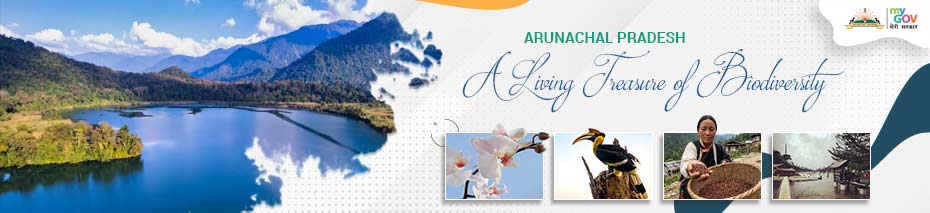
Arunachal Pradesh is one of India’s most biologically diverse states, where forests, rivers, wetlands, mountains and communities are part of one interconnected ecological landscape. Its extraordinary range of habitats supports thousands of plant and animal species, including several rare, endemic and threatened species.
The State’s biodiversity is shaped by its remarkable variation in altitude and climate. From tropical forests in the foothills to temperate forests, alpine meadows and high-altitude ecosystems, Arunachal Pradesh offers a continuous range of habitats within a relatively compact geographical area.
With more than 80 per cent of its geographical area under forest cover, the State plays an important role in maintaining the ecological balance of the Eastern Himalayas. It is also part of the Eastern Himalaya Biodiversity Hotspot, one of the world’s globally recognised regions of exceptional biological richness and conservation importance.
A Landscape of Remarkable Ecological Diversity
The geographical diversity of Arunachal Pradesh is reflected in its forests. Depending on altitude and climatic conditions, the State has tropical evergreen and semi-evergreen forests, moist deciduous forests, subtropical broad-leaved forests, pine forests, temperate forests, coniferous forests, sub-alpine vegetation and alpine meadows.
This remarkable transition from the warm foothills to the high Himalayas creates habitats for species with very different ecological requirements.
The State is home to more than 5,000 species of flowering plants, around 600 species of orchids, about 75 species of rhododendrons, 45 species of bamboo, 17 species of cane and hundreds of medicinal plants. Arunachal Pradesh is particularly renowned for its orchid and rhododendron diversity.
The forests also support a remarkable variety of mammals, including the tiger, leopard, clouded leopard, snow leopard, golden cat, marbled cat, Asiatic elephant, red panda, takin, hoolock gibbon and several other rare and threatened species.
A Paradise for Birds
Arunachal Pradesh is equally celebrated for its avian diversity. Its forests and mountain ecosystems provide habitats for hundreds of bird species, making the State one of the most important birding regions in India.
The Eaglenest Wildlife Sanctuary in West Kameng is one of the best examples of this extraordinary richness. Located within the Eastern Himalaya Biodiversity Hotspot, Eaglenest is home to a wide variety of hornbills, pheasants, kingfishers and other birds. The sanctuary is also known for the discovery of the Bugun liocichla, a bird named after the Bugun community that lives in the region.
Protecting Arunachal’s Wildlife
Arunachal Pradesh’s biodiversity is protected through an extensive network of national parks, wildlife sanctuaries, tiger reserves and other conservation landscapes.
The state is home to important protected areas such as Namdapha National Park and Tiger Reserve, Kamlang Tiger Reserve, Pakke Tiger Reserve, Mouling National Park, Eaglenest Wildlife Sanctuary, Sessa Orchid Sanctuary, Dibang Wildlife Sanctuary and Mehao Wildlife Sanctuary, among others.
These landscapes support an exceptional range of wildlife, from high-altitude species such as the snow leopard and red panda to tropical forest species including the clouded leopard, hoolock gibbon and numerous birds, reptiles and amphibians.
Recent wildlife surveys have continued to expand scientific knowledge of these ecosystems. A 2024 WWF-India survey in Arunachal’s high-altitude rangelands recorded six wild cat species, including photographic evidence of the elusive Pallas’s cat, marking the first such photographic record from the state. The survey used 136 camera traps across 83 locations, covering approximately 2,000 sq km.
The Orchids of Arunachal Pradesh
Among the many botanical treasures of the State, orchids hold a special place.
Arunachal Pradesh has one of the richest orchid assemblages in India, with hundreds of species occurring across its varied habitats. The Sessa Orchid Sanctuary in West Kameng was established in 1979 to conserve and study orchids in their natural habitats. The sanctuary has recorded a remarkable diversity of orchid species, including epiphytic and terrestrial orchids.
The Orchid Research and Development Centre at Tipi further strengthens conservation and research efforts. Its facilities include orchid species houses, natural orchidaria, a herbarium, tissue culture laboratory, museum and hardening units. These initiatives support both ex-situ conservation and the rehabilitation of orchids in their natural habitats.
Glaw Lake: Arunachal Pradesh’s First Ramsar Site
A landmark development came in August 2026, when Glaw Lake, located within the Kamlang Tiger Reserve in Lohit district, was designated as India’s 101st Ramsar Site and became Arunachal Pradesh’s first Ramsar Site.
Situated at an elevation of around 1,168 metres, Glaw Lake covers approximately 82 hectares and forms part of the catchment of the Kamlang, Lang and Lati rivers, which flow into the Lohit River. The lake is recognised by the State Forest Department as an important repository of aquatic biodiversity.
Its Ramsar designation gives international recognition to the ecological importance of the wetland and strengthens the focus on its conservation and sustainable management. The recognition is also significant for Arunachal Pradesh’s wider efforts to protect wetlands and the ecosystems and communities that depend on them.
A State Where New Discoveries Continue
Arunachal Pradesh’s biodiversity story is still being written.
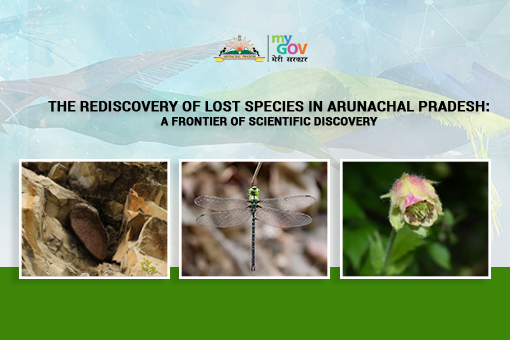
Recent scientific discoveries demonstrate how much remains to be documented within the State’s forests and mountains. The rare plant Vaccinium piliferum, a relative of the wild blueberry that had not been documented for nearly 188 years, was rediscovered in Vijoynagar in Changlang district recently.
New orchid species have also been identified in different parts of the State, while researchers have recorded new cascade frog species from Arunachal Pradesh. In 2026, scientists also identified a new butterfly species, Euthalia zubeengargi, from Basar in Leparada district.
Such discoveries are a reminder that Arunachal Pradesh is not merely a repository of known species. Its forests and mountains continue to offer opportunities for scientific research and the discovery of life forms that may not yet be fully documented.
Biodiversity and Indigenous Knowledge
For generations, the indigenous communities of Arunachal Pradesh have lived closely with their natural surroundings. Forests provide food, medicinal plants, fibres, fuel and other resources, while traditional knowledge has helped communities understand seasonal changes, plants, wildlife and sustainable use of natural resources.
Today, this relationship is increasingly important to conservation.
A recent example comes from West Kameng, where indigenous communities are sustainably harvesting Zanthoxylum, locally known as Khagi, a wild Himalayan spice. The initiative has reportedly involved around 200 families while contributing to the protection of approximately 100 square kilometres of forest and generating livelihood opportunities.
Such efforts demonstrate that conservation and livelihoods can move together when local knowledge and sustainable practices are placed at the centre of biodiversity management.
Conservation: Protecting a Living Legacy
Arunachal Pradesh’s biodiversity is a natural asset of national and global importance. At the same time, ecosystems across the world are facing growing pressures from habitat loss, climate change, pollution, invasive species and unsustainable exploitation of natural resources.
Protecting Arunachal’s biodiversity therefore requires more than creating protected areas. It calls for habitat restoration, scientific research, responsible tourism, community participation, sustainable livelihoods and greater awareness among citizens.
The State’s protected areas, community conservation initiatives, biodiversity documentation programmes and institutions dedicated to research and conservation all contribute to this larger effort.
Looking Ahead
The story of Arunachal Pradesh is inseparable from its forests, rivers, mountains and wildlife. Its biodiversity sustains ecosystems, supports livelihoods, enriches traditional knowledge and strengthens the ecological security of the Eastern Himalayas.
From the orchids of Sessa to the forests of Namdapha, from the bird-rich landscapes of Eaglenest to the wetlands of Glaw Lake, every ecosystem adds another chapter to the State’s natural heritage.
The recent recognition of Glaw Lake as a Ramsar Site is an important milestone, but it is also a reminder of the responsibility that comes with being home to such extraordinary natural wealth.
Arunachal Pradesh is a living treasury of biodiversity and conserving it is not only about protecting nature today, but ensuring that its forests continue to breathe, its rivers continue to flow, and its remarkable species continue to thrive for generations.