Breathing Life into the Tamsa – River Revival in Azamgarh

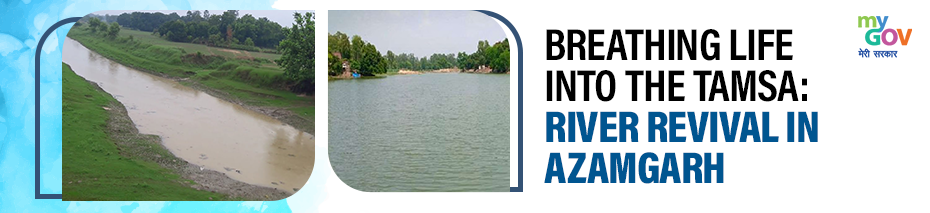

Once languishing under the weight of neglect, invasive vegetation, and pollution, the Tamsa River—flowing through Azamgarh district of Uttar Pradesh—has undergone a remarkable transformation. At the sacred confluence of the Tamsa and Silani rivers, near the culturally revered Chandrama Rishi Ashram, a month-long mission has breathed new life into this once- forgotten stretch. This turnaround, driven by administrative resolve and grassroots participation, offers a compelling example of how rivers can be reclaimed, both as ecosystems and as cultural touchstones
At the forefront of this mission is Shri Ravindra Kumar, IAS (2011 batch), the District Magistrate of Azamgarh, whose leadership galvanized departments, communities, and institutions into coordinated action. His vision and proactive stewardship have brought about one of the most successful local-level river rejuvenation campaigns carried out in this district.
Tamsa: More Than a River
The Tamsa originates in Ambedkar Nagar district and flows through Faizabad, Azamgarh, Mau, and Ballia, where it eventually joins the Ganges. The river is more than a waterbody; it is a lifeline of memory, faith, and sustenance.
The river is steeped in mythology and folklore. According to the Ramayana, it was along the banks of the Tamsa that Lord Rama, Sita, and Lakshmana spent their first night after departing Ayodhya. It is also said to have hosted sages like Valmiki and Chandrama Rishi, whose ashram at the river‘s confluence is a key site for religious rituals and local festivals. Yet over time, this sacred river fell victim to the very progress it once supported.
A River in Peril
For years, the Tamsa‘s stretch near the Chandrama Rishi Ashram had become a shadow of its former self. The river was heavily silted, its flow impeded by aquatic weeds, garbage, and plastic waste. During the dry months, it reduced to stagnant patches of foul-smelling water, unusable for ritual or recreation. Locals had ceased bathing or conducting ceremonies at the riverbank, and biodiversity in the area had visibly declined.

Weed-clogged river
This wasn‘t an isolated problem. Across the region, rivers like the Tamsa have suffered from lack of public awareness, and unchecked dumping. Despite its cultural value, the river was treated as a drain, not a revered heritage.
The Turnaround: Leadership and Local Action
The revival effort owes much to the initiative of Shri Ravindra Kumar, IAS, the District Magistrate of Azamgarh. Recognizing both the spiritual significance of the Chandrama Rishi Ashram and the urgent ecological need, he spearheaded a month-long mission in 2025 to restore the river at this key stretch.
What made this campaign truly impactful was the collective involvement:
• Sanitation teams from the Panchayati Raj Department cleared years ‘worth of weeds, debris, and pollution.
• Irrigation department started work related to de-silting and restored flow of the river.
• Elected village Pradhan and civil society volunteers especially women turned the campaign into a community-led movement, creating a sense of ownership among locals.
Infrastructure at the ashram was simultaneously restored, including water units, public washrooms, and visitor pathways, enhancing accessibility for devotees and tourists alike.
Yoga Day Becomes a River Day

Dignitaries inspecting river on Yoga day
Building on the success of the cleanup, International Yoga Day was observed on June 21, 2025, at the revitalized Chandrama Rishi Ashram. The event served as a symbol of holistic revival— of both body and nature. The celebration was graced by Shri Anil Rajbhar, the Prabhari Mantri (Minister In-Charge) of Azamgarh, and Shri Naveen Kumar G.S, IAS, the district‘s nodal officer, who took a detailed tour of the Ghats and lauded the success of the transformation.
Their visit added weight to the initiative and publicly affirmed the administration‘s commitment to environmental stewardship and cultural renewal.
Most significantly, Shri Ravindra Kumar used the occasion to declare his intention to scale this revival into a people‘s movement across the entire stretch of river. He called upon schools, gram panchayats, local institutions, and community leaders to participate actively in maintaining and protecting water bodies, turning the cleanup into a continuous public campaign rather than a one-time effort.
Transformation and Impact
The change has been dramatic. What was once a weed-infested, lifeless stream is now a clear- flowing river flanked by cleaned Ghats, welcoming pilgrims and reconnecting people to their environment. The atmosphere around the ashram has visibly improved, both spiritually and ecologically.

The change has been dramatic. What was once a weed-infested, lifeless stream is now a clear- flowing river flanked by cleaned Ghats, welcoming pilgrims and reconnecting people to their environment. The atmosphere around the ashram has visibly improved, both spiritually and ecologically.
This effort has brought about:
- Ecological restoration with the noticeable return of aquatic life and improved water quality.
- Restoration of natural flow and de-silting.
- Health benefits from reduced pollution and mosquito breeding.
- Cultural renewal as rituals and fairs have resumed with increased participation. People have started thronging the place for performing Havan etc.
- Tourism and livelihoods gaining momentum from improved access and aesthetic appeal. People now stroll around Ghats of the in the morning and evening. School children also come in large numbers and visit this place.
Conclusion: A River Reclaimed, A Movement Begins
The revival of the Tamsa River at Chandrama Rishi Ashram is more than an environmental success story—it‘s a template for how leadership, community, and administration can work together to reclaim heritage and restore ecological balance.
Under the committed leadership of Shri Ravindra Kumar, District Magistrate, Azamgarh has not only cleaned a stretch of river but also sparked a district-wide movement aimed at preserving its rivers for future generations. The celebration of Yoga Day on the newly restored Ghats is symbolic of that journey—from neglect to mindfulness, from pollution to purity. The district administration intends to do landscaping of Ghats of the river to enhance its beauty.

As the Tamsa flows once again with pride and purpose, it carries with it the hopes of a district ready to embrace sustainability, participation, and legacy.
Writer – Ravindra Kumar is an IAS Officer