Launch of e-Challan Machines: Revolutionising Traffic Management in Arunachal Pradesh
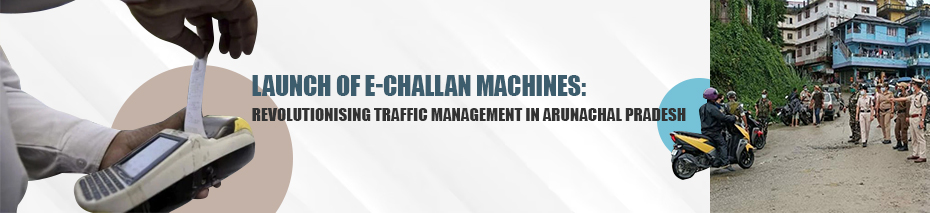
In recent years, the integration of technology into various aspects of our daily lives has brought about significant changes and improvements. One such technological advancement that has made a remarkable impact in the administrative/governing space is the introduction of e-challan machines in traffic management systems. These electronic devices have streamlined the process of issuing and paying traffic fines, offering numerous advantages for both law enforcement agencies and citizens alike.
Introducing the Electronic Challan System in Arunachal Pradesh
Arunachal Pradesh is taking significant strides in embracing digital and technical advancements while prioritising the safety and progress of its citizens. In a noteworthy development, during the conclusion ceremony of the 35th National Road Safety Month at the State Banquet Hall (Itanagar), the state’s Transport Minister, Shri Nakap Nalo, officially inaugurated e-challan machines in the region. This progressive move not only underscores the state’s commitment to leveraging technology for enhanced governance but also reinforces its dedication to road safety.
This initiative, a collaborative effort between the Department of Transport, the State Bank of India (SBI), and the National Informatics Centre, encompassed user-friendly features and addressed key functionalities of the traffic enforcement system. SBI waived off the charges for the 90 POS machines they facilitated, whereas the National Informatics Centre ensured the facilitation of end-to-end solutions for seamless integration with the e-challan applications. Enforcement agencies underwent training to adeptly operate these machines.
As a gesture of support, the transport department donated twenty medical kits to the All Arunachal Pradesh Public Transport Federation, further reinforcing their commitment to road safety initiatives. This collaborative effort, marked by technological advancement and strategic partnerships, signifies a significant step toward enhancing road safety measures in the region.
The initiative to introduce e-challan aligns with the broader context of National Road Safety Month, observed by the transport department from January 15 to February 14. This timeline is dedicated to raise awareness about road safety and initiate measures to enhance it. Arunachal Pradesh, by incorporating e-challan systems, is contributing substantially to the overarching goal of creating safer road environments.
Effectiveness of Implementing an E-Challan System
The introduction of electronic-generated challan machines holds significant potential, not only for enhancing traffic management but also for broader positive impacts, such as:
1. Fast and Efficient Processing: The old manual ticketing procedure has been replaced by a fast digital process through the use of e-challan devices. By recording offences and issuing fines swiftly, these electronic gadgets cut down on the time spent on paper documentation. In addition to helping law enforcement personnel, its effectiveness guarantees a speedier settlement for those who receive tickets.
2. Quality in Documentation: The high probability of errors attributed to traditional data entry is eliminated by the electronic format of e-challan equipment. The data regarding violations of traffic laws is precisely documented and kept in a centralised database for easier retrieval and investigation processes.
3. Increased Transparency: E-challan machines provide comprehensive details on offences, such as the date, time, and kind of violation, which increases overall accountability. Online access to this data ensures transparency in the assessment and administration of traffic penalties for citizens. This transparency promotes a sense of accountability by strengthening public confidence in law enforcement organisations.
4. Convenient Payment Options: The ease with which penalties can be paid is advantageous to citizens. Online payments are among the many payment methods that e-challan systems provide. Due to this flexibility, people are able to pay their penalties on time, which lessens the load on the administrative system as well as on the offender.
5. Reduction in Corruption: The use of e-challan devices cuts back on potential unethical behaviour associated with manual ticketing processes. The use of automated procedures and electronic data reduces the possibility of fraud or bribery. This decline in corruption helps to create a just and equitable traffic management system while also bolstering the legitimacy of law enforcement.
6. Eco-friendly: The switch to e-challan machines is in line with initiatives to cut down on paper use and encourage environmental sustainability. These devices help to make traffic control more environmentally friendly by doing away with the need for printed tickets and paperwork.
7. Collaboration with Smart City Projects: It is relatively easy to include e-challan systems into projects related to smart cities. Through the utilisation of digital devices and information analytics technology, major towns can establish interconnected networks that enhance accessibility in cities in general. This combination creates greater efficiency and a healthy city atmosphere by supporting a comprehensive approach regarding traffic regulation.
In conclusion, the implementation of the e-challan system is expected to optimise traffic enforcement by fostering a more methodical and responsible approach to enforcing traffic regulations.
With the adoption of digital interfaces such as the implementation of e-challan devices, the State Govt continues to reinforce its commitment towards strengthening an effective traffic management system, in line with its broader goal of streamlining all administrative processes across the various departments of the State. It also highlights the government’s proactive stance on adapting to the rapidly evolving advancements for the greater benefit of the people.
Also, everyone must embrace road safety, actively engage in local awareness, and take personal responsibility. Relying solely on authorities is not sufficient; instead, fostering a culture of safety and promoting good driving habits independently is key to making our streets safer.